Screening is an important part of bulk material processing in industries such as mining, minerals, food processing, chemicals, pharmaceuticals, foundries, and recycling, where materials need to be separated by particle size, unwanted particles removed, or products classified into different grades.
Industrial vibrating equipment such as vibratory screening equipment is important for these bulk material processing industries. This screening equipment uses controlled vibration to move materials across the screening surface and help separate the particles according to their size.
In this guide, let’s learn what vibratory screening is, different types of screening equipment, and the factors that can affect screening efficiency.
What is Vibratory Screening Equipment?
Vibratory screening equipment is a machine that uses controlled vibration to separate and classify bulk materials according to their particle size. First, the material is introduced into a screening surface where vibration moves it across the screen. The screening media in this equipment have openings where the small particles pass through, while the larger particles continue through the discharge outlet.
This screening equipment is used for different purposes, such as:
- Particle-size classification
- Fine-material separation
- Grading
- Removal of unwanted particles
- Separation of bulk solids
- Preparation of material for downstream processing
Different Types of Vibratory Screening Equipment at Vibro Flux
At Vibro Flux, we bring two different types of industrial screen equipment to meet the different screening requirements of various industries.
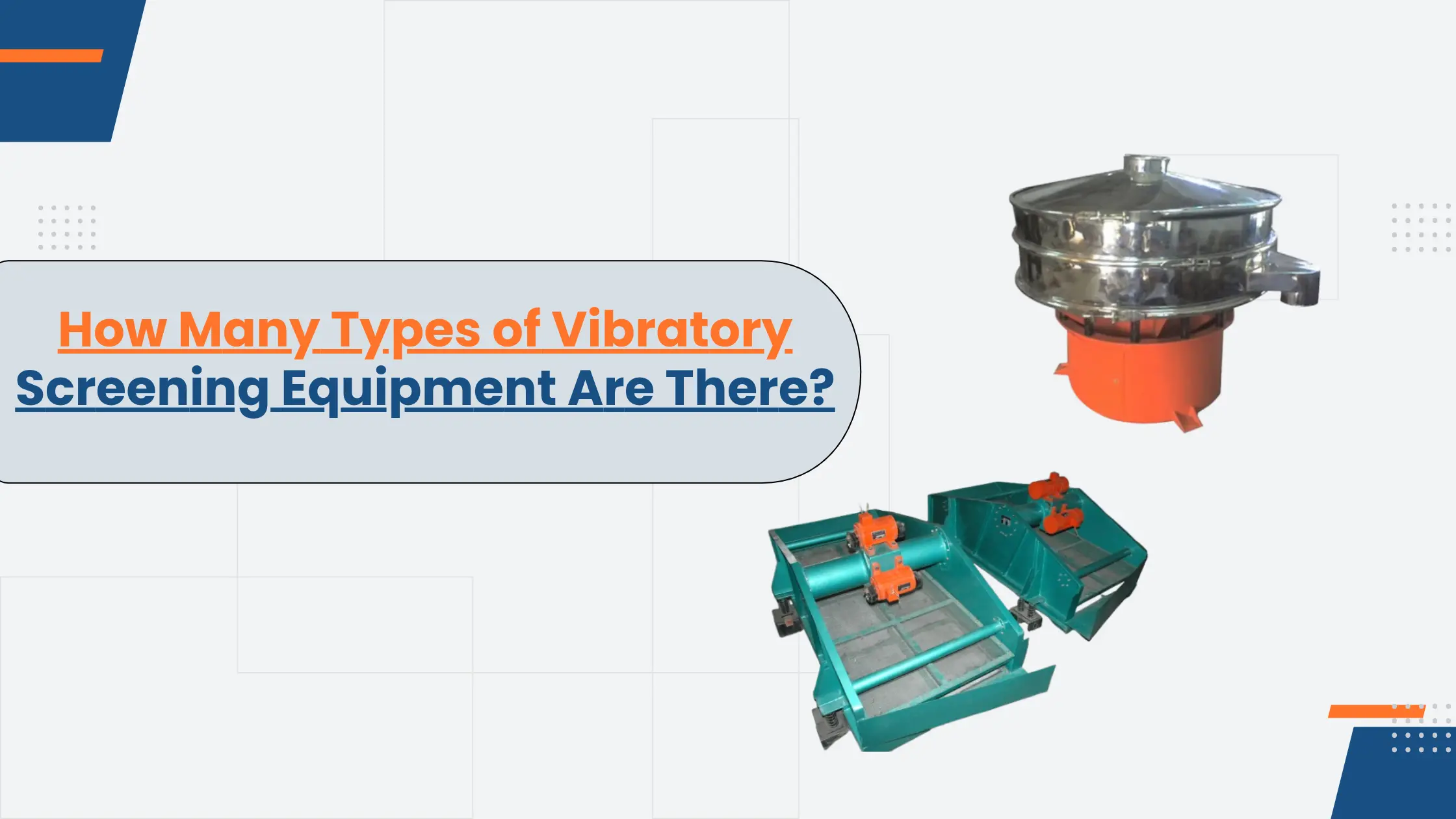
A gyratory screen separator uses gyratory movement to separate fine and ultra-fine materials. These separators are designed for accurate particle separation, grading, scalping, and dedusting across industries, from food and chemical to mineral processing.
Gyratory screening is used for applications involving:
- Fine powders
- Granular materials
- Pharmaceutical products
- Food products
- Chemicals
- Mineral-processing materials
This equipment supports high-throughput processing, helps maintain consistent product quality, and reduces product loss. The exact configuration of this screen machine should be selected according to the material properties, required separation, and other factors.
A horizontal screen separator is designed for screening bulk materials in demanding industrial conditions involving aggregates, minerals, sand, etc. Its horizontal screen can be configured with multiple decks to provide separation of different particle sizes.
These types of screens are suitable for applications such as:
- Aggregate screening
- Mineral processing
- Sand screening
- Bulk material classification
- Material separation
Their multiple deck and dust-suppressing designs support screening efficiency and higher capacity in demanding industrial environments.
Gyratory Screen Separator vs Horizontal Screen Separator
Although both screen separators are used for vibratory screening, their application differ. Here are some factors in which these separators differ from each other:
Main Purpose of Screening
Gyratory screen separators are mainly used for separating and grading fine and ultra-fine material. Meanwhile, horizontal screening is used for bulk material separation.
Typical Materials Used in Them
In gyratory screening, fine powders, granular materials, and minerals are used. Meanwhile, aggregates, minerals, sand, and bulk solids are used in horizontal screen separators.
The key application of gyratory separation is accurate particle separation. But for horizontal screen separators, the key application is high-capacity industrial screening.
A gyratory vibrating screen diagram is used in food, pharmaceutical, chemical, and mineral processing industries. On the other hand, horizontal screening equipment is used in aggregates and other bulk material application industries.
Horizontal screen separators have a multi-deck configuration available; as for gyratory screening, it is designed with innovative 3D motion technology.
What Factors Affect Vibratory Screening Efficiency?
The type of industrial vibrating equipment you are using is only one factor that affects the screening efficiency. There are many other operating and material-related factors that affect the screening performance, such as:
The particle size of feed material affects the screening performance. If the screen opening is not appropriate for the desired particle size separation, the equipment won’t produce the required fractions.
Different materials work differently in these types of screens. For example, fine and sticky material will behave differently from dry, free-flowing aggregate.
The amount of material you release into the separator equipment affects how these particles interact with the screening surface. For example, a high feed rate creates a thick layer of material, not letting the small particles pass through the screen.
Screen separators have openings which let the particles pass through. Hence, the opening size will determine which particle can pass through, making it necessary to choose the correct screening media.
For better screening according to particle size, there is multi-deck screening equipment. The number of decks affects how materials are separated into multiple size fractions during a single screening operation.
The characteristics of vibration, such as the frequency, influence material movement across the screening surface. Furthermore, the appropriate vibration conditions depend on the machine design and material characteristics.
Reliable Industrial Vibratory Equipment Manufacturer: Vibro Flux
At Vibro Flux, a vibratory equipment manufacturer, we bring robust industrial vibratory equipment for screening, feeding, compaction, and bulk material handling. Among our machines, our current screening equipment includes gyratory and horizontal screen separators.
Furthermore, we provide custom engineering for application-specific requirements, including equipment redesign, performance and capacity upgrades, and specific modifications. We also provide equipment for various stages of bulk material processing and handling.
Final Thoughts
Vibratory screening equipment is important for screening and separation of bulk material in different industries. These different screen technologies create different material movements to address various separation requirements.
The gyratory screen separator is used for accurate separation and grading of fine materials such as powder. Meanwhile, the horizontal screen separator is useful for screening bulk materials such as sand, aggregates, and minerals.
Choose the right equipment for your application and industry while considering factors like material, particle size, load capacity, etc. Contact Vibro Flux for professional guidance and to explore screening solutions that meet your specific material and screening requirements.